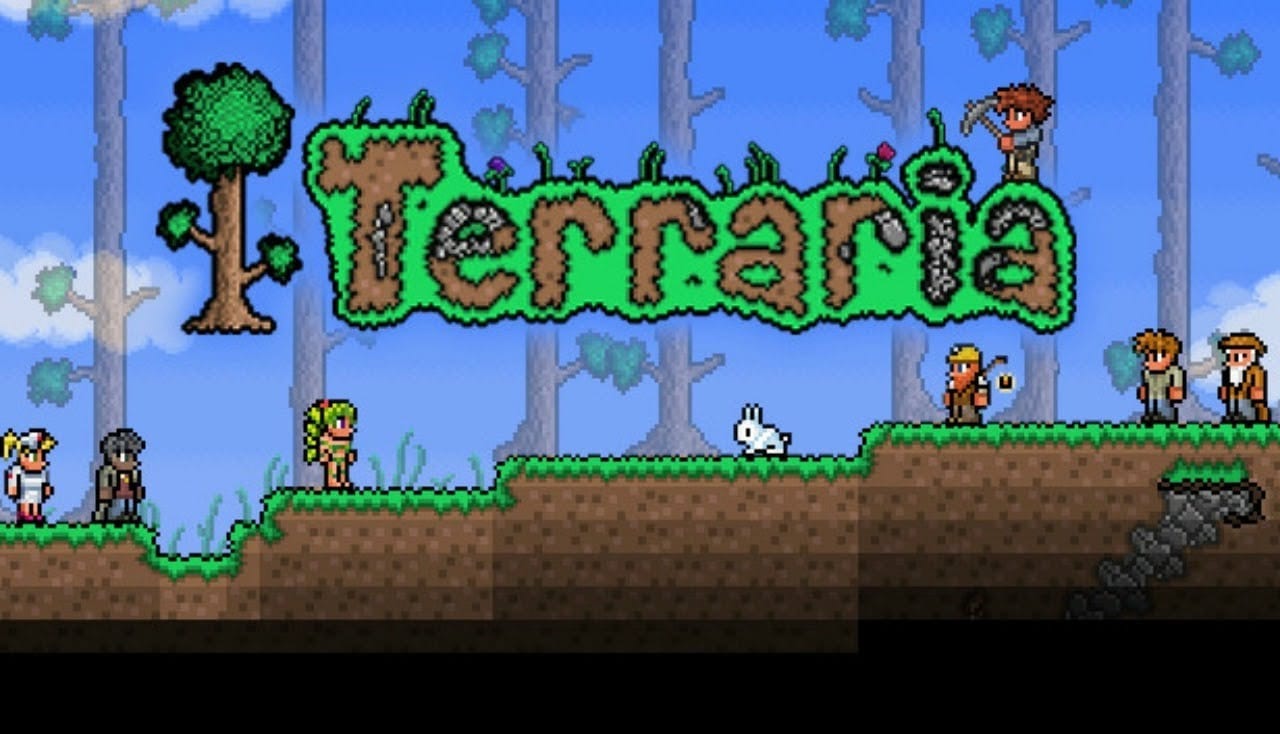
You can create artificial biomes in Terraria by placing enough biome-specific blocks in one area. This is useful for building farms, controlling enemy spawns, changing NPC shops, creating themed bases, or bringing specific biome effects closer to your main base.
The required number of blocks varies significantly. Some biomes need as few as 7 Tombstones or 75 blocks, while others require as many as 1,500 blocks.
Here’s how to create each major artificial biome and the exact requirements to watch for.
How Artificial Biomes Work in Terraria
Terraria detects many biomes based on how many qualifying blocks are located around your character.
That means you generally don’t need to transform an enormous section of the world.
Instead, place enough qualifying blocks close together to reach the biome’s threshold.
Different biomes have different requirements, including:
- Specific biome blocks
- Grass-covered blocks
- Tombstones
- Water
- Height or world-position requirements
Some nearby blocks can also interfere with biome detection.
How to Create a Forest Biome
The Forest biome is the simplest because you don’t create it by adding Forest blocks.
Instead, you need to remove enough influence from other biomes.
Get rid of nearby biome-changing blocks associated with areas such as:
- Corruption
- Crimson
- Hallow
- Jungle
- Snow
- Desert
- Mushroom
Once no other biome has enough influence, the area can return to a normal Forest biome.
How to Create a Graveyard Biome
To create a Graveyard biome, place at least:
7 Tombstones
close together.
Once enough Tombstones are nearby, the atmosphere changes and Graveyard-specific effects become active.
Why Create a Graveyard?
Graveyards are particularly useful because some NPCs offer different items while living or standing inside one.
That makes artificial Graveyards useful for accessing special shop inventories without permanently changing your main town.
Watch Out for Sunflowers
Sunflowers reduce the influence of Graveyards.
If Sunflowers are nearby, you may need to place additional Tombstones before the Graveyard activates.
If the biome isn’t appearing with seven Tombstones, remove nearby Sunflowers or simply add more Tombstones.
How to Create a Corruption Biome
To create an artificial Corruption biome, place:
300 Corruption-related blocks
close together.
Suitable blocks include blocks that naturally contribute toward the Corruption biome.
Once enough are within range, the surrounding area will begin behaving like Corruption.
Things That Can Reduce Evil Biome Influence
Avoid placing the artificial biome too close to:
- Sunflowers
- Competing biome blocks
If other biome effects are interfering, you may need more than the base 300 blocks.
How to Create a Crimson Biome
Crimson works similarly to Corruption.
Place:
300 Crimson-related blocks
in the same general area.
Once the threshold is reached, the location can function as an artificial Crimson biome.
How to Get the Opposite World Evil
Normally, a world naturally generates with either:
- Corruption
- Crimson
If you want to create the opposite evil biome, you can eventually obtain the corresponding Seeds from the Dryad.
The setup requires:
- Hardmode
- Dryad
- Graveyard biome
This lets you obtain the opposite evil’s Seeds and create that biome even if your world didn’t naturally generate with it.
How to Create a Glowing Mushroom Biome
To build an artificial Glowing Mushroom biome, start with at least:
100 Mud Blocks
Then plant Mushroom Grass Seeds on the Mud.
Mushroom Grass will spread across connected Mud Blocks and eventually create the glowing blue appearance of the biome.
How to Get Mushroom Grass Seeds
Mushroom Grass Seeds can be obtained by breaking plants in an Underground Glowing Mushroom biome.
Another option is using Shimmer with:
Jungle Grass Seeds
to obtain Mushroom Grass Seeds.
This makes it possible to build your own Mushroom biome wherever you want.
How to Create a Jungle Biome
To create an artificial Jungle biome, use approximately:
140 Jungle biome blocks
A simple approach is using Mud Blocks with Jungle Grass Seeds.
Jungle Grass can spread across Mud once planted.
Jungle Grass Seeds can drop while breaking plants growing throughout the Jungle, so gathering enough for an artificial biome is usually straightforward.
How to Create a Hallow Biome
To create an artificial Hallow biome, place at least:
125 Hallow-related blocks
nearby.
Qualifying blocks can include things such as:
- Pearlstone
- Hallowed Sand-type blocks
- Other Hallow-converted blocks
You aren’t limited to using Seeds.
How to Get Hallowed Seeds
Once Hardmode begins, you can buy Hallowed Seeds from the Dryad.
These can be used to spread Hallow onto suitable blocks and establish an artificial biome.
How to Create a Desert Biome
Desert is one of the more expensive artificial biomes because it requires:
1,500 qualifying blocks
Sand-related blocks contribute toward the Desert.
This includes blocks with Sand in their type or name, along with:
Hardened Sand
Because 1,500 blocks is a substantial amount, artificial Deserts take much more material than biomes such as Hallow or Corruption.
How to Create an Ocean Biome
Artificial Ocean biomes work differently from most other biomes because water alone isn’t enough.
You’ll need approximately:
1,000 tiles of Water
The location of the water also matters.
The Ocean needs to be positioned near the outer edge of the world rather than around the center.
The source gives the horizontal requirement as being within roughly:
330 blocks of either world edge
The water must also be deep enough for the game to recognize the Ocean conditions.
Because of these positional restrictions, you generally can’t build a fully functional Ocean biome anywhere you want in the center of the map.
How to Create a Snow Biome
An artificial Snow biome requires:
1,500 Snow-related blocks
That makes it another resource-heavy biome.
Use large quantities of qualifying Snow and Ice biome blocks near the area where you want the Snow biome to activate.
Because the requirement is so high, creating one from scratch usually means collecting a substantial amount of material from your natural Snow biome.
How to Create a Meteorite Biome
Meteorite is much easier to reproduce.
You need only:
75 Meteorite Blocks
Place them close together and the area can gain Meteorite biome properties.
Compared with Snow or Desert, this requires very little space.
Building large artificial biomes block by block?
A comfortable gaming mouse can make repeated block placement and inventory management easier during long building sessions.
Shop Products on Amazon →
How to Create a Dungeon Biome
Dungeon is one of the more unusual artificial biomes.
You need approximately:
250 matching Dungeon Blocks
However, simply placing Dungeon Blocks anywhere on the surface isn’t enough.
The area must also be below approximately:
-4 height
This means the artificial Dungeon needs to be built underground far enough for the Dungeon biome conditions to activate.
Terraria Artificial Biome Requirements
Here’s the main information in one place:
| Biome | Requirement |
|---|---|
| Forest | Remove competing biome influence |
| Graveyard | 7 Tombstones |
| Corruption | 300 qualifying blocks |
| Crimson | 300 qualifying blocks |
| Glowing Mushroom | 100 Mud Blocks with Mushroom Grass |
| Jungle | 140 qualifying Jungle blocks |
| Hallow | 125 qualifying blocks |
| Desert | 1,500 qualifying blocks |
| Ocean | About 1,000 Water tiles + world-edge requirements |
| Snow | 1,500 qualifying blocks |
| Meteorite | 75 Meteorite Blocks |
| Dungeon | 250 matching blocks + underground height requirement |
Tips for Building Artificial Biomes
Keep the Biome Compact
You don’t necessarily need a huge natural-looking region.
If you’re creating the biome for:
- Farming
- NPC shops
- Fishing
- Enemy spawns
a compact block cluster is usually much easier to build.
Watch for Competing Biomes
Nearby biome blocks can affect what Terraria recognizes.
This is particularly important when working with:
- Corruption
- Crimson
- Hallow
- Graveyard
If the expected biome isn’t activating, check what other blocks are nearby.
Remove Sunflowers When Necessary
Sunflowers can interfere with Graveyard and evil biome influence.
If your biome should be active but isn’t, removing nearby Sunflowers is an easy troubleshooting step.
Build Multiple Biomes Near a Farming Area
Artificial biomes are especially useful when creating centralized farming setups.
Instead of traveling across the map every time you need biome-specific enemies or drops, you can create several controlled biome sections near the same general location.
Just keep enough separation between them that one biome doesn’t unintentionally overpower another.
Which Artificial Biomes Are Easiest to Make?
The smallest requirements in this setup are:
- Graveyard — 7 Tombstones
- Meteorite — 75 blocks
- Glowing Mushroom — around 100 Mud Blocks with Mushroom Grass
- Hallow — 125 blocks
- Jungle — 140 blocks
The most material-intensive are:
- Desert — 1,500 blocks
- Snow — 1,500 blocks
So if you’re planning a large artificial-biome hub, expect Desert and Snow to take considerably more time and resources than most of the others.
Once you’ve collected the right materials, artificial biomes let you move a surprising amount of Terraria’s world mechanics into locations that are much more convenient for farming, building, NPC management, and exploration.
Leave a Reply