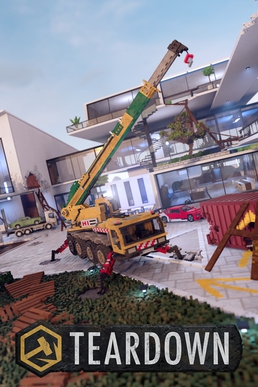
Modding in Teardown is both powerful and accessible, opening up countless ways to customize and expand your gameplay. Whether you’re looking to create a handy new tool or build an entire level or campaign, understanding the difference between global mods and content mods is the first step.
This guide breaks down the basics of both types of mods, walks through the process of creating them, and highlights some useful tips to help you get started modding in Teardown.
1. Global Mods – Always-On Enhancements
Global mods are like global rules or tools — once enabled, they apply across all parts of the game. A good example is a laser gun mod. When activated, the laser gun becomes available in both sandbox and campaign modes without the need to load any special level.
- How They Work: Once you enable a global mod, it becomes active anywhere you play — campaign, sandbox, or other content mods.
- Use Cases: Tools like grappling hooks, distance counters, HUD widgets, and of course, fun weapons.
Example:
- Enable the laser gun as a global mod.
- Start a campaign level — the laser gun is there.
- Load up a sandbox map — it’s there too.
Global mods enhance how you play Teardown, not necessarily what you play.
2. Content Mods – Custom Experiences
Content mods offer more structured or standalone experiences. They can be entirely new levels, racetracks, mini-games, or even full campaigns. You launch them directly from the mods menu using the Play button.
- Examples: User-created missions, puzzle maps, time challenges, or even large campaigns with story.
- How They Load: Content mods are selected and started directly from the mods menu and run independently of the main campaign.
You can still combine the two: for example, enable a global mod like the laser gun, and then play a custom content mod with that weapon active.
3. Creating a Global Mod
To create your own global mod:
- Right-click in your local files and select New Global Mod.
- This generates a folder with a few files:
- info.txt: Where you describe your mod (title, description, tags).
- main.lua: This Lua script runs automatically whenever the global mod is enabled.
Customization Steps:
- Navigate to the folder using the path shown in-game.
- Rename the mod folder as desired.
- Edit info.txt to reflect your mod details.
- Paste your Lua code into main.lua and save.
Example Mod: A script that tracks and displays the distance you’ve traveled in-game.
Once the files are ready, enable the global mod and launch any level — you should see your mod in action.
4. Creating a Content Mod
Creating a content mod is slightly different:
- Right-click and choose New Content Mod.
- This also creates a folder with key files:
- info.txt: As with global mods, this contains the mod description.
- main.xml: Describes the scene layout for the level.
Extra Features:
- A Play button appears in the mod menu.
- An Edit button opens the level in the in-game editor.
After renaming the folder and updating the info.txt, you can launch your content mod to test or develop further.
By default, you’ll see a basic template scene. You can build upon this using the Teardown editor (more on that in future tutorials).
5. Additional Mod Files and Best Practices
Both global and content mods support a few optional extras:
- preview.jpg: This image will appear as the mod thumbnail in the mod browser and will also be uploaded to the Steam Workshop when publishing.
- options.lua: Optional settings menu for your mod. This is where you can allow users to tweak values or enable features.
Learning from Others: You can make a local copy of existing mods like the built-in Speedometer global mod to explore their structure. This is a great way to reverse-engineer how certain features were built.
Summary
| Type | Purpose | Always Active | Launchable Scene | Custom Scripts |
| Global Mod | Add tools or gameplay mechanics | ✅ | ❌ | main.lua |
| Content Mod | Create new levels, campaigns, experiences | ❌ | ✅ | main.xml |
Modding in Teardown is extremely versatile, and with just a few files, you can start creating tools, environments, or whole new game types. Whether you want to make something as simple as a new gadget or as expansive as a full campaign, understanding the difference between global and content mods gives you the foundation to build from.
Now that you know the basics, try making your own — and keep an eye out for more in-depth tutorials on building levels and scripting logic in the future!


 My Gaming Tutorials
Leave a comment