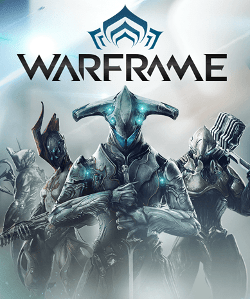
So, you’ve decided to dive into the vast, ten-year-old universe of Warframe — the free-to-play looter-shooter where you’re basically a space ninja, slicing and blasting your way through enemies in an ever-expanding galaxy of content. If that sounds like a lot, that’s because it is. But don’t worry — this beginner’s guide is your hand-held walkthrough into the chaos. This is Episode One of a full series, with each part designed to demystify one of the most overwhelming yet rewarding free-to-play games ever made.
Starting Out: What Even Is Warframe?
To put it simply, Warframe is about killing enemies, collecting loot, crafting better gear, getting stronger, and then repeating that cycle on a grander, flashier scale. You start with a cinematic introduction from the Lotus, waking you up and setting you on one of two initial paths: the “Warframe path” or the “Duviri path.” Here’s the thing — don’t sweat this choice. You’ll get access to both paths early on. Still, if you want a smoother, more tutorial-friendly introduction, go with the Warframe path.
Picking Your First Warframe
Once you’ve begun your journey, you’ll be prompted to choose one of three starter Warframes: Excalibur, Mag, or Volt. Each has its own playstyle and appeal:
- Excalibur is the poster boy: balanced, sword-focused, and great for melee lovers.
- Volt brings speed and lightning, excellent for beginners and advanced players alike.
- Mag manipulates magnetic fields — great if you like a more technical style.
If you want a recommendation, go for Volt or Excalibur. But ultimately, choose what excites you. After this, you’ll jump into a tutorial mission that covers your basic movement, combat, and abilities. Complete it, and you’ll find yourself aboard your Orbiter — your personal spaceship and home base.
The Orbiter and Your First Quest
Your Orbiter is where the bulk of your management happens: crafting, customizing, launching missions — it all starts here. The first major quest you’ll tackle is Vor’s Prize. It introduces you to the flow of gameplay, basic systems, and sets the stage for everything that follows.
After a few missions, you’ll be introduced to the modding system, the navigation star chart, and maybe even start to feel a little overwhelmed. That’s okay. Everyone hits that wall. Let’s break it down.
Understanding the Ultimate Goal
So, what’s the point of Warframe? In short: progression. Your goal is to unlock planets, complete quests, level up gear, build new weapons and Warframes, and most of all — increase your Mastery Rank (MR). MR is essentially your account level and determines what gear and content you have access to. Once you hit MR16, you’ll have unlocked nearly everything in the game. Anything beyond that — up to Legendary Rank 3 (MR33) — is icing on the cake.
The fastest way to level up your MR? Build and max out Warframes and weapons. Every weapon (except a few exceptions) gives 3,000 MR points at level 30. Warframes give 6,000. You gain points, and once you have enough, you’ll be prompted to take a test. Be warned — fail, and you have to wait 24 hours to retry. So practice first.
The Star Chart: Planets and Progression
After Vor’s Prize, you’ll gain access to the star chart — your navigation hub for missions. You start on Earth and work your way through different planets. To move to the next planet, you must complete Junctions. These are progression gates that require certain objectives to be met, like completing missions or defeating bosses.
You can either rush through by doing just the minimum required or take your time and clear every node (mission) on each planet. The latter is recommended — it makes the game flow smoother later on and helps with farming.
Each node introduces different mission types, such as:
- Exterminate: Kill a set number of enemies.
- Capture: Hunt down and capture a target.
- Defense: Defend a point from waves of enemies.
- Spy: Stealth missions requiring hacking into vaults.
- Interception, Sabotage, Excavation, and more.
If it sounds like a lot — it is. But each mission type is intuitive once you’ve played it a few times. You can also check your Codex for mission descriptions.
Meet the Factions
You’ll mostly fight against four factions:
- Grineer: Heavily armored, military-industrial enemies.
- Corpus: Tech-savvy, shielded corporate types.
- Infested: Gross, organic swarms.
- Corrupted: Enemies twisted by Void energy.
Each has strengths, weaknesses, and unique mechanics you’ll learn with time.
Modding: The Lifeblood of Power
Now for the big one: Mods. Modding is where Warframe’s complexity — and brilliance — shines. Mods are upgrade cards that boost your Warframe’s and weapons’ performance. You slot them into gear using energy capacity. Mods can be leveled up using Endo and credits, and fused into more powerful versions.
It can be overwhelming at first. Most players open the mod screen and panic — and rightly so. But don’t worry, you’ll only need to understand the basics early on. For now, just equip whatever increases your damage, survivability, and energy capacity. In time, you’ll learn to min-max and build synergy-heavy loadouts.
The Foundry, Arsenal, and Market
- Foundry: This is your crafting station. Here, you’ll build Warframes, weapons, gear, and more using blueprints and resources you collect in missions. Crafting times are long — 12 hours to 3 days — so always have something cooking.
- Arsenal: Where you equip your gear and customize loadouts. This includes your Warframe, primary/secondary weapons, melee, companions, and cosmetics.
- Market: This is where you can purchase blueprints for weapons and frames using credits, or buy them instantly with Platinum (the premium currency). Many new players make the mistake of thinking you have to spend Platinum — but you don’t. You can farm most things in-game.
Warframe isn’t pay-to-win. It’s pay-for-convenience. And that makes a huge difference.
Platinum and Trading
You can farm Platinum through player-to-player trading. That’s right — the premium currency can be earned just by selling valuable items to other players. This makes Warframe uniquely fair compared to other free-to-play games. While you can spend money, you never have to. Everything is obtainable with time and effort.
The Grind and The Glory
Yes, Warframe is a grindy game. A massive one. But it’s also incredibly rewarding. You never feel like you’re hitting an impassable wall — just a hill to climb. And unlike many live-service games, Warframe doesn’t pressure you with time-limited FOMO events. Take your time. Play at your pace.
The key is pushing past the overwhelming beginning. Once you get the hang of mods, movement, and mission flow, Warframe becomes one of the most satisfying, stylish games out there.
Final Thoughts and Advice
- Don’t rush. Let the game breathe.
- Use the Codex if you’re lost.
- The Warframe Wiki is your best friend. Bookmark it.
- Join a clan — we’ll talk more about that soon.
- And most importantly, ask for help. The community is helpful, and questions are always welcome.
That’s it for Episode One of this beginner’s guide. From here, future episodes will explore the systems more deeply — including modding, farming strategies, Platinum trading, and more. So stick around.
Welcome to Warframe. The grind is real, but so is the fun.


 My Gaming Tutorials
Leave a comment