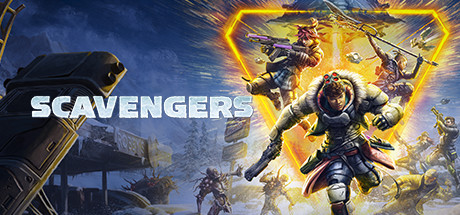
Welcome to Scavengers, a high-stakes survival shooter where 60 players—split into teams of three—battle it out on a hostile, icy planet. If you’re new to the game, there’s a lot to take in, from brutal environmental conditions to intense squad-based skirmishes. This guide breaks everything down to help you get ahead of the curve fast.
The Basics: Understand the Mission
Each match drops 20 teams into the map with one goal: extract with the most data points. While PvP is a constant threat, the environment itself is also out to get you. To win, you need to gather data points, survive harsh temperatures, manage resources, and stay one step ahead of other teams.
You’ll need to watch three crucial elements from the get-go:
- Temperature: Represented by a snowflake icon in the lower-left corner. If it drops too low, your health begins to drain. Stay warm by using thermal boosts and finding fires scattered across the map.
- Map Awareness: Camps with data points are marked in orange, with a number indicating how many points are available. Watch the numbers — if they’re decreasing or uneven, another team is already there.
- Energy: This depletes as you sprint, jump, and act. If it runs out, a striped bar begins eating into your total energy. Refill it by eating food at the right time.
Plan Your Route: Be Efficient, Not Random
As soon as the match starts, pull up your map and chart a path through high-yield data camps. Prioritize early data collection but remain flexible — purple markers indicate high-tier PvE camps later in the match, often featuring mini-bosses and tougher enemies. These camps drop 50 to 100 data points — worth the risk if you’re prepared.
Along the way, keep an eye out for:
- Ammo Camps – Resupply your firepower.
- Med Camps – Refill on healing items.
- Armor Camps – Grab defensive boosts.
- Orange Satellites – These are data deposit points. Banking your points here protects them from being lost if you die.
Speaking of death: you’ll revive after 60 seconds if a teammate is still alive. But dying drops half your data points, so play it smart.
Combat and Movement: Adapt and Survive
Energy and warmth are just the beginning. Combat in Scavengers is fast-paced and layered:
- Learn how to kite enemies and maintain distance during PvE.
- Use elevation and cover for defensive positioning.
- Coordinate ambushes and flanks with teammates to win PvP encounters.
You’ll want to have one weapon for range and one for close quarters. Shotguns dominate up close, while semi-automatic rifles and snipers hold strong at range.
Always balance your gear. A good loadout can be the difference between wiping a squad or getting wiped.
Crafting and Upgrading Gear
Press C in-game to open the crafting menu. All crafting uses scrap, which is dropped by enemies and found throughout the world.
Here’s your typical crafting progression:
- Signature Weapon – Unique to each Explorer. Craftable after Level 2.
- Shield Upgrades – Mandatory for survival.
- Side Gear – Grenades, thermal boosts, and backup weapons.
You won’t have many options at first. But over time, you’ll unlock more items through research.
Research System Explained
Back in the main menu, head to your Research Station. Here’s how it works:
- Deconstruct Salvage you find in matches to obtain materials.
- Use these materials to research new items, like weapons, gear, and perks.
- Keep an eye on the battery meter — it limits how much you can research at once. It recharges over time.
A good starting plan: prioritize researching the Thermal Boost Mk II, early sidearms, and throwables.
Choosing Your Explorer
There are seven different Explorers, each with their own ability and signature weapon. It’s crucial to:
- Experiment with all of them.
- Find one that suits your style.
- Build a squad with synergy — for example, combining close-range brawlers with long-range support.
Good team comps are half the battle. Don’t go in blind with three melee-focused characters unless you have a plan.
Weapon Tips and Loadout Balance
Not all weapons are balanced perfectly, so part of early play is experimentation. Here’s a solid rule:
- Always carry a ranged weapon and a close-range backup.
Many fights begin at distance and close in quickly. You want to be ready for both scenarios.
- Shotguns: Devastating in tight quarters.
- Snipers: Great for open zones and ambushes.
- Semi-Auto Rifles: A safe all-around choice.
Try out a wide range of guns early on. What feels clunky at first might click with a little practice.
Final Thoughts: Learn, Adapt, and Conquer
The key to winning in Scavengers isn’t brute strength — it’s preparation. Learn the map. Understand the systems. Upgrade smart. Team up wisely. And above all, bank your data points whenever possible.
This is just the start. As you research new gear, unlock better weapons, and dial in your loadout, you’ll become a serious threat in the wasteland.
Now get out there, keep your team alive, and extract with the most data.
We’ll see you on the dropship.



 My Gaming Tutorials
Leave a comment