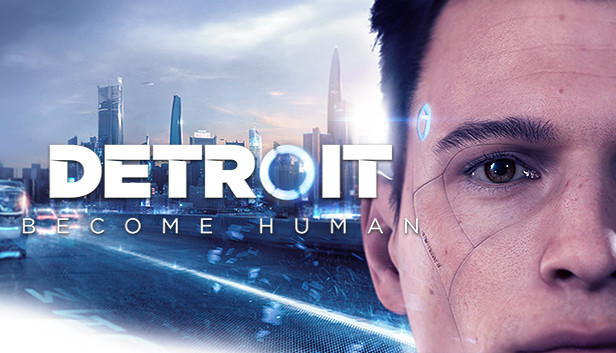
As Detroit: Become Human approached release, it stirred a mix of anticipation and curiosity — and for good reason. From its cinematic presentation to its ambitious branching narrative, it promised to be more than just a game; it was poised to become a deeply interactive exploration of artificial intelligence and human emotion. If you’re looking to dive into this world, here are ten key things you need to know before starting your journey.
1. From a Tech Demo to a Narrative Masterpiece
The entire concept of Detroit: Become Human emerged from a PlayStation 3 tech demo titled Kara. Originally meant to showcase the potential of hardware and facial capture, it featured an android expressing unexpected emotion. What started as a visual experiment inspired director David Cage to ask the obvious question: “What happens next?” The short evolved into a full game, exploring a society where androids — built for tasks like nursing, cleaning, and clerical work — begin to deviate from their programmed behavior.
The core story is set in a near-future Detroit and is heavily inspired by Ray Kurzweil’s The Singularity Is Near, which examines how machine intelligence may soon eclipse human capabilities. Detroit leans into this speculative future, raising tough questions about what it means to feel, to choose, and to be alive.
2. A New Engine Built for Emotional Immersion
Quantic Dream developed an entirely new game engine for Detroit to better serve its cinematic ambitions. Given the emotional weight of the story — focused on androids struggling with sentience — visual fidelity and realistic performance capture were non-negotiables. The studio invested heavily in dynamic lighting, camera physics, and effects like bokeh (blurry background lighting) to create a film-like depth of field.
The result? A visually rich experience running at 2160p checkerboard resolution on PS4 Pro, locked at 30 FPS. Even on the standard PS4, it delivers impressive visuals with strong lighting and atmospheric fidelity. This technical polish ensures that the weight of the narrative hits as hard as it needs to.
3. A Massive Cast and No Game Over Screen
Unlike most games that center around a single protagonist, Detroit features three playable characters — each with their own arcs, perspectives, and motivations. What’s more, there are no traditional game over screens. If any of the three protagonists die, the game simply continues without them.
More than 250 actors were cast across three countries (Los Angeles, London, Paris) to bring 513 characters to life. This vast scope not only adds realism but also emphasizes the game’s central theme: that every life, whether android or human, plays a role in the story’s tapestry.
4. Dialogue Is Deep and Consequential
Dialogues in Detroit are anything but filler. Interrogations, investigations, and simple conversations can unlock entire new branches of the story. Whether it’s something as small as discovering a clue in a crime scene or picking up on a subtle facial expression, choices ripple outward with tangible weight.
A single missed detail might close off important opportunities later. Likewise, a well-timed observation could unlock previously unseen outcomes. Conversations aren’t just about choices — they’re about how much you’ve noticed, learned, and retained from your surroundings.
5. You’re Not Locked In Forever
While the game encourages living with your decisions, it also recognizes that players may want to tweak outcomes. Using the in-game flowchart, you can revisit previously completed segments to try alternate paths.
You can’t rewind in real-time during a scene, but once a segment concludes, you’re free to replay it from the main menu. The game presents this not as a cheat but as an exploration tool — a way to see just how much changes with each action.
6. No One Is Safe — And That’s the Point
We’ve mentioned it before, but it bears repeating: there are no game over screens. Every death — be it a lead or a background character — has an impact. When a character dies, the narrative moves forward, reshaping the entire experience.
Imagine if Solid Snake died in Metal Gear Solid and the game just… kept going. That’s what Detroit dares to do. It may feel jarring, even unsettling, but it creates a realism that few narrative games can claim.
7. Estimated Length and Replayability
Depending on how you play, the main story of Detroit can last anywhere from 8 to 12 hours. But this isn’t a game designed to be played once. The depth and branching options all but demand multiple playthroughs.
You might breeze through the plot once in 10 hours, but returning with a new perspective reveals countless small details, alternate paths, and character developments you likely missed the first time. It’s a game built with replayability in mind — a rare gem in an era increasingly focused on endless loops rather than deep, meaningful re-engagement.
8. The Flowchart is a Game-Changer
To help manage its sprawling narrative structure, Detroit offers a revolutionary in-game flowchart. Pause at any time to access it and see the full scope of choices made — and the paths left unexplored.
This isn’t just a recap. It’s a branching timeline that shows consequences, missed opportunities, and paths you might revisit. For those who step away from the game for a few days, it’s also an effective refresher that helps you remember the stakes, relationships, and critical decisions.
9. Invisible Timers Add Real Tension
Not every time-sensitive decision in Detroit is marked by a clock. Many sequences — like the hostage negotiation in the demo — have invisible timers. Delay too long, and events unfold with or without your input.
This mechanic ensures a level of organic tension. You’re not just reacting to visual cues; you’re reading the scene, managing pressure, and making judgment calls. The absence of an overt countdown makes choices feel more grounded — more human.
10. No Microtransactions, No DLC (At Launch)
In an era saturated with paid add-ons and microtransactions, Detroit stands firm. There were no microtransactions at launch, and no downloadable content was initially planned. The entire story is packaged and delivered in full.
That said, the digital deluxe edition offers a few bonuses like dynamic PS4 themes, a digital artbook, and Heavy Rain as a downloadable bonus title. For fans of Quantic Dream’s earlier work, it’s a nice nostalgic tie-in.
Final Thoughts
Detroit: Become Human is not just a game — it’s a question mark hovering over our relationship with technology. What separates machine from human? What defines identity? And at what point does choice become the ultimate act of rebellion?
Through its complex characters, haunting aesthetic, and masterful use of branching narrative, Detroit invites you to find your own answers. Just remember: your choices matter. And in this game, every one of them echoes.
Whether you play it once or three times over, Detroit will likely stick with you long after the credits roll.



 My Gaming Tutorials
Leave a comment