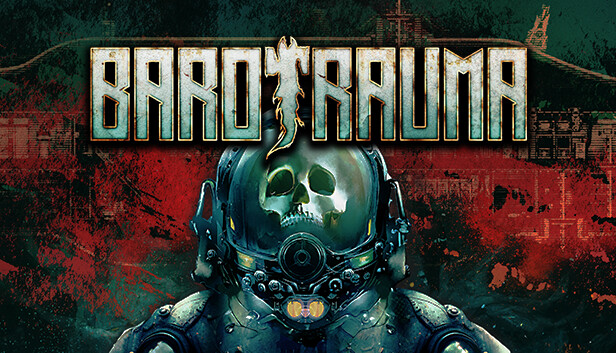
Barotrauma is a game of extremes—equal parts chaotic, strategic, terrifying, and hilarious. Set aboard a submarine navigating the dark, monster-infested oceans of Jupiter’s moon Europa, it challenges you to cooperate with (or survive) up to 16 other players while maintaining a fragile vessel and tackling the planet’s ever-growing threats. If you’ve already dipped your toes into the game and completed the basics, it’s time to explore the core mechanics and systems that define a successful campaign.
Understanding the Core Gameplay Loop
Each mission boils down to a tense trek from one side of the map to the other. Your goals? Navigate the submarine, complete assigned missions, and most importantly, avoid death by the many threats Europa throws your way. These threats include massive undersea creatures, hull breaches, electrical failures, and the most consistent killer of all: the crushing pressure of the water outside. Even a small leak can become fatal in moments, and unless you’re properly equipped with a diving suit for your current depth, stepping into a flooded compartment can mean instant death.
Beyond the obvious threats, Europa hides deeper dangers. Below each level lies the Abyss, a pitch-black region containing the game’s rarest resources and deadliest creatures. Venturing into the Abyss is risky but can reward the daring with advanced loot.
Campaign Mode: Charting a Course to the Core
In campaign mode, you and your crew operate a submarine on a journey toward Europa’s core. The map scrolls from left to right as you progress, and each biome introduces unique challenges—new monsters, environmental hazards, and more complex missions. As you move forward, you dock at various stations that act as your hubs for restocking, upgrading, and mission briefings.
Stations are aligned with different factions, each offering specific items, perks, and missions. Buying and selling goods here is strategic—certain factions pay more for particular resources, and your standing with a faction can unlock discounts and exclusive gear. It’s worth noting that taking missions for one faction may harm your reputation with another, so choose alliances carefully.
Some of the most lucrative tasks come not from mission givers but from persistent world events like Beacon Station or Abyssal Monster encounters. Completing these will earn you cash and may also upgrade nearby stations into cities—which boast better inventories and services.
Campaign difficulty can be adjusted at the start. You can enable Jovian radiation, forcing a faster descent to the core, or tweak how many missions appear per route. All of these impact the pressure and pacing of your campaign.
Mission Types and Reputation
Your mission options vary: mining expeditions, item retrieval, monster hunts, cargo transport, or sub-vs-sub combat. Missions increase in difficulty the deeper you go but also become more profitable. Choose wisely based on your submarine’s capabilities.
Reputation plays a key role. Positive standing with a faction can lead to better prices, unique items, and improved stations. Conversely, ignoring or working against a faction may restrict your access to their goods or services. In multiplayer campaigns, hosts can set crew salaries, letting players spend their earned money on personal gear.
Submarines: Classes, Systems, and Upgrades
Each submarine is a finely tuned machine made up of complex systems that require constant attention:
- Reactor: Provides power and must be fueled and managed manually.
- Engine: Controls forward and backward motion.
- Ballast Tanks & Pumps: Regulate buoyancy for ascending and descending.
- Navigation Console: Your main hub for steering and sonar scanning.
- Junction Boxes: Route power between systems.
- Turrets & Periscopes: Defend the vessel.
- Supercapacitors: Boost turret firing.
- Fabricators/Deconstructors: Craft and recycle items.
Systems decay over time or get damaged from water, explosions, or EMP attacks. Regular maintenance is crucial.
There are three submarine classes: Scout, Transport, and Attack. Scouts are speed-oriented, Transports emphasize cargo and crafting, while Attack subs excel in defense and firepower. Each class has tiers (1 to 3), dictating available upgrades. You start with Tier 1, but as you progress and gather resources, you unlock better subs. However, certain talents (like the Mechanic’s “Iron Storm”) can push lower-tier subs to Tier 3 upgrade potential.
Character Classes, Talents, and Skills
Characters have six distinct roles, each specializing in different tasks: Captain, Engineer, Mechanic, Medic, Security, and Assistant. Each gains XP from mission payouts, unlocking Talent Points. Talents provide bonuses to individual or team performance. Each class has three unique talent trees and a shared pool of general upgrades.
Skill development is action-based: repairing, healing, navigating—the more you do it, the better you get. Books can speed this up, and some items boost skills passively. Roles are ideally filled by multiple players or crew bots, but some (like Captain) are usually limited to one.
The best crews delegate according to specialization but remain adaptable. Emergencies demand flexibility, so every player should carry a basic set of tools.
Essential Equipment and Loadouts
At minimum, each crew member should carry:
- Plasma Cutter + Oxygen Tank: For cutting through blocked paths.
- Welding Tool + Fuel Tank: For sealing breaches.
- Screwdriver & Wrench: To repair or rewire systems and doors.
- Bandages, Blood Packs, Opiates: For healing injuries, blood loss, and restoring vitality.
- Ranged Weapon + Ammo: For repelling boarders or monsters.
- Diving Suit + Underwater Scooter: For exterior missions or emergencies.
Many items come with quality variants and can be crafted with high-skill characters for better stats. Genetic enhancements, unlocked later in the game, can transform your character with powerful passive bonuses.
Wrapping Up
Barotrauma is not just about survival—it’s about collaboration, learning, and making the most of your tools and crew. From your first descent to the planet’s core to your final confrontation with the secrets lurking below, every step is an exercise in preparation and adaptability.
Whether you’re navigating a routine cargo run or desperately welding a hull breach while your engine explodes behind you, one truth always remains: teamwork keeps the sub afloat. Good luck, and happy sailing!



 My Gaming Tutorials
Leave a comment