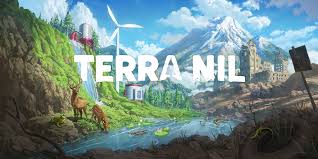
The Abandoned Quarry is not just a throwback to Terra Nil’s first map — it’s a reimagined, advanced version built to push your skills to their limits. Playing on Environmental Engineering difficulty, this guide assumes you’re ready for serious strategy, tight economy management, and creative puzzle-solving. It’s an intricate dance of lava, rivers, controlled burns, and beehives — all with the goal of restoring nature and leaving no trace behind. Let’s walk through the restoration step by step.
1. Assessing the Terrain and Surviving the Economy
At first glance, you’ll notice just how tricky this layout is. Geysers dot the land, potentially releasing lava, and rocks line the edges — making toxin scrubbing coverage much harder than in earlier biomes. The game starts tight, with very little room for financial error.
Initial placements must be efficient. Get your turbines down in areas with wide coverage, and avoid wasting placements next to already-developed rivers. It’s tempting to over-invest early, but pacing your turbine expansion while squeezing value out of each irrigation and detox action is key. Filling rivers can yield a surprising currency return, so don’t skip out on water restoration — even if it feels costly at first.
2. Strategic Toxin Scrubbing and Greenery Building
Once you’ve got power and some early rivers flowing, start scrubbing. Every toxin scrubber must pull its weight — and thanks to the map’s spacing, that’ll often mean creative placement. Stack their effects and pair them with high-value irrigators to build up lush, fertile land.
This map makes it tricky to maximize returns. You’ll find yourself debating whether to take a +41 refund now or risk going for higher later. Don’t worry — Terra Nil rewards clever resource loops. Hydroponiums, for example, can help you recoup losses with their high return when placed on wetland tiles.
Keep pushing humidity past 30% with Cloud Seeders to unlock bonuses, but avoid sinking too much into it too early. Target your irrigator spots for maximum low-ground payoff to feed into future biome conversions.
3. Manipulating Terrain with Lava and Science
As you begin to exhaust easier land conversions, it’s time to bring out advanced tech. Controlled lava releases from geysers — often triggered by seismic detonations — create stone when they meet water. Use this interaction to expand rocky surfaces for turbines, dehumidifiers, and forest expansion.
A few precise detonations can alter the layout drastically. Combined with dehumidifiers and solar amplifiers, you’ll begin setting up for controlled burns — a crucial step in creating Arboretums for forests.
One clever mechanic: if you’re stuck on how to burn a forest tile to create ashy nutrients for finbos, try creating dry brush using dehumidifiers. Then apply a solar amplifier to light it. This trick will let you start controlled burns in areas that would otherwise be unburnable — especially when building husks aren’t available.
4. Orchestrating Forests and Beehives
With stone and ashy soil in place, it’s time to build up forests. Use Arboretums on burnt tiles for large, leafy sections — critical for supporting future biodiversity. It’s essential to think vertically here, especially since elevation matters. Building multi-layer forests can be a boon when done right.
Now, here comes the real challenge: beehives. Beehives require trees, and ideally ones placed on hilly terrain. Since beehives are critical for biome completion, you’ll need to weave forest and beehive placement into a single, well-coordinated system. Don’t hesitate to lose a bit of currency if it means establishing a high-value beehive network.
Timing rainfall is also a huge deal here. Once it starts, controlled burns become difficult — rain can extinguish your carefully laid fire paths. Get your fires done first, then trigger rain to boost productivity and help meet optional goals.
5. Puzzle-Solving with Hydroponiums and Rain
As wetlands play a major part in your biome goals, hydroponiums are your friend. Place them where irrigators have turned low ground green and aim for “ideal” markers. Be cautious — your water tiles are limited, and misplacement could cost you the biome goal.
Rain can revitalize these efforts. As soon as you’ve done your burns, start rainfall to get beautiful returns from all wetland buildings. Combine this with smart, layered placement of irrigators to maximize hydroponium spread.
6. Unlocking and Placing Animals
With the land in bloom, build an Animal Observatory and begin the biodiversity phase. Each animal requires specific biome and terrain conditions:
- Brown Bear – Needs a forest with a beehive on a hill.
- Frog – Thrives in Wetlands.
- Deer – Grassland.
- Timberwolf – Forest adjacent to Deer.
- Beaver – Requires a river next to forest.
- Helmet Goose – Needs water.
Some animals require particularly long rivers or unusual setups. Don’t be afraid to create a new river with excavation tools — as long as you get the tile count and biome mix right, the scan will succeed. It’s especially satisfying to solve the beaver puzzle by carving your own water path through the land.
7. Final Recycle and Departure
With six animals discovered and all biomes thriving, it’s time to vanish. Drop your Airship and use Monorails for efficient recycling. With resources tight, you may need to lean into Recycling Beacons and Silos to clear remote installations. Work backward from your furthest monorail node and clear strategically.
Make sure to tick off any optional objectives like high humidity before wrapping up. Then, board your airship and leave the land pristine — reborn from its industrial scars into a harmonious ecosystem.
Final Notes
The Abandoned Quarry map in Terra Nil feels like a carefully crafted puzzle — not just in terrain layout, but in its economic tension and biome dependencies. From building elaborate irrigation setups to leveraging volcanic geysers for terrain transformation, it demands your full attention and creative problem-solving.
If you’ve completed this challenge, you’ve proven yourself as a true environmental engineer. But this is only the first of four advanced regions. The next maps promise even greater challenges. Until then, go forth and bloom.



 My Gaming Tutorials
Leave a comment